How to Check If Eyeliner Looks Even Without Over-Correcting
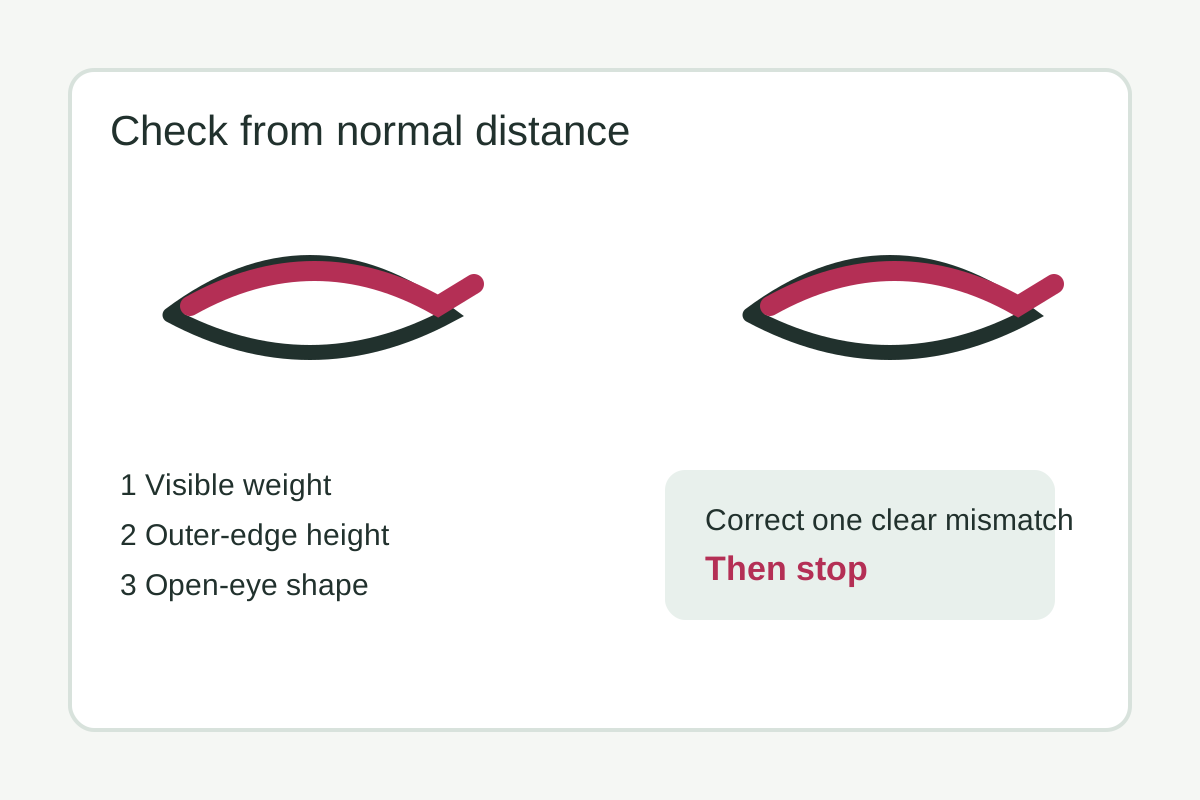
Compare eyeliner placement and finish by visible weight, outer-edge height, and open-eye shape, then stop after one correction.
Compare fairly
The side-by-side answer
Open both eyes and compare eyeliner placement, visible line weight, outer-edge height, and the finish that remains visible in a normal mirror. Choose the clearest mismatch, correct it once, then stop. Similar open-eye weight matters more than identical closed-eye geometry.
Try this first: step back, compare visible weight, outer-edge height, and open-eye shape, correct one mismatch once with a small cleanup, and stop when normal-distance balance no longer pulls attention.
- Move
- Step back, compare three cues, correct only the clearest mismatch once, and stop.
- Cue
- visible line weight and outer-edge height
- Stop
- Stop when both eyes carry similar visible weight at normal distance.
Decision snapshot
Control the visible step before changing the kit
When checking if eyeliner looks even without over-correcting, can you compare visible line weight, outer-edge height, and open-eye shape before both sides become heavier?
- Move
- Step back, compare three cues, correct only the clearest mismatch once, and stop.
- Cue
- visible line weight and outer-edge height
- Stop
- Stop when both eyes carry similar visible weight at normal distance.
Read the normal-distance and visible-weight sections first, then use the one-correction stop point to decide whether a tiny edge cleanup is worth touching product again.
- A lid fold can hide part of a line, so closed-eye geometry is not the final check for finished eyeliner.
- A small endpoint cleanup is easier to control than redrawing both eyes and making both lash lines wider.
- Eye-cosmetic irritation belongs outside a beauty comparison, so discomfort, watering, or product texture changes need a stop boundary.
After reading, you should know whether to keep the eyeliner, make one small correction, or stop before over-correcting.
Use this first
Eyeliner evenness check
Visible line weight, outer-edge height, and open-eye shape decide whether one correction is enough.
- Try once
- Clean or shorten the clearest outer-edge mismatch once while leaving the other eye unchanged.
- Watch for
- Both eyes should carry similar dark weight with the lids open.
- One endpoint should not clearly sit lower, longer, or blunter at normal distance.
- After one correction, another pass should not be needed to make the face read balanced.
- Leave alone
- Leave mascara, shadow, lower liner, brow changes, and the rest of the makeup unchanged until the finished upper-liner balance has been compared once.
- Skip for now
- Avoid matching closed-eye geometry, alternating corrections, and widening both lash lines.
- Stop when
- Stop when the mismatch no longer draws attention at normal distance.
Move to beginner eyeliner only when initial placement, not finished balance, is still the problem.
Keep the look when both eyes carry similar visible weight at normal distance; make one small correction only when one outer edge or gap is clearly more noticeable.
Use the beginner eyeliner guide when placement is not built yet; use mascara or eyeshadow guides when liner balance is no longer the main task.
Cue card
Compare on one axis
A finished-look eyeliner balance check with a clear stop point.
- Use this page when
- Read the normal-distance and visible-weight sections first, then use the one-correction stop point to decide whether a tiny edge cleanup is worth touching product again.
- Switch when
- Use the beginner eyeliner guide when hand support, short strokes, or first placement is still the task.
Fit Ladder handoff
Color
Use this route as the next small test. Save checklist items on the homepage Fit Ladder when you want the path to follow you.
- Move
- Step back, compare three cues, correct only the clearest mismatch once, and stop.
- Cue
- visible line weight and outer-edge height
- Stop
- Stop when both eyes carry similar visible weight at normal distance.
When to choose each one
Read each option as a trade-off check. The better answer is the one that handles visible line weight and outer-edge height with less extra work.
| If this is true | Choose | Do not choose | Why it wins |
|---|---|---|---|
| One eyeliner line looks heavier at normal distance | Compare visible weight with both eyes open and keep the thinner result if the two eyes already carry similar emphasis. | Adding another full pass to the lighter eye before checking the open-eye finish. | Visible weight is the cue people notice first, while drawn width can look different on each lid. |
| One outer edge looks lower, longer, or blunter | Clean or shorten only that eyeliner edge once with a clean cotton swab or small brush. | Redrawing both lash lines or extending both outer corners to chase a perfect wing. | A small endpoint cleanup protects placement and finish better than widening both sides. |
| Tiny gaps show only in a magnifying mirror | Step back to normal distance and judge whether the eyeliner gap is still visible with both eyes open. | Filling every close-up gap until the lash line becomes a thick band. | Ordinary viewing distance decides whether the finish reads balanced enough to keep. |
| The lid fold hides part of one line | Judge the open-eye shape that is actually visible rather than pulling the lid flat. | Forcing both closed-lid lines into identical geometry. | Different lid folds can make matching drawings look unequal after the eye opens. |
| The product or eye feels wrong | Stop using the product and keep eye-cosmetic hygiene separate from the symmetry check. | Sharing eyeliner, adding liquid to revive it, or continuing through irritation. | Cosmetic balance checks cannot judge eye symptoms or product-safety concerns. |
Same setting
One eyeliner line looks heavier at normal distance
- Choose
- Compare visible weight with both eyes open and keep the thinner result if the two eyes already carry similar emphasis.
- Do not choose
- Adding another full pass to the lighter eye before checking the open-eye finish.
- Why it wins
- Visible weight is the cue people notice first, while drawn width can look different on each lid.
Color trade-off
One outer edge looks lower, longer, or blunter
- Choose
- Clean or shorten only that eyeliner edge once with a clean cotton swab or small brush.
- Do not choose
- Redrawing both lash lines or extending both outer corners to chase a perfect wing.
- Why it wins
- A small endpoint cleanup protects placement and finish better than widening both sides.
Makeup boundary
Tiny gaps show only in a magnifying mirror
- Choose
- Step back to normal distance and judge whether the eyeliner gap is still visible with both eyes open.
- Do not choose
- Filling every close-up gap until the lash line becomes a thick band.
- Why it wins
- Ordinary viewing distance decides whether the finish reads balanced enough to keep.
Fair test
The lid fold hides part of one line
- Choose
- Judge the open-eye shape that is actually visible rather than pulling the lid flat.
- Do not choose
- Forcing both closed-lid lines into identical geometry.
- Why it wins
- Different lid folds can make matching drawings look unequal after the eye opens.
Second pass
The product or eye feels wrong
- Choose
- Stop using the product and keep eye-cosmetic hygiene separate from the symmetry check.
- Do not choose
- Sharing eyeliner, adding liquid to revive it, or continuing through irritation.
- Why it wins
- Cosmetic balance checks cannot judge eye symptoms or product-safety concerns.
Eye-cosmetic irritation belongs outside a beauty comparison, so discomfort, watering, or product texture changes need a stop boundary. Ignore new product shopping, dramatic wing changes, and the rest of the eye look until the finished liner balance is settled.
Similar comparisons
Choose another answer only if the trade-off changes
These pages look close, but each one changes a different cue or setting.
Second pass
If the trade-off is still close
Use a slower route only when the first comparison leaves a real conflict.
Separate fast, careful, and stop routes
Use this answer when the decision has to work today. Use compare visible weight with both eyes open and keep the thinner result if the two eyes already carry similar emphasis. as the opening try and check only placement, amount, tool pressure, and finish. This answer is best when the shelf, bag, mirror, or schedule already feels crowded.
Use this answer when two options both seem reasonable. Put them next to the exact situation: one outer edge looks lower, longer, or blunter. Then compare blend, wear time, face balance, and cleanup effort instead of picking the newer or more dramatic option. The better choice is the one that makes the next use easier to repeat, not the one that sounds more impressive.
Use this answer when the decision makes you want to add more steps immediately. Pause if the current choice already answers tiny gaps show only in a magnifying mirror, or if the practical choice belongs in a different beauty area. Pausing protects the comparison so you can see whether the first adjustment was useful.
Judge the trade-off after a real try
Judge how to check if eyeliner looks even without over-correcting on an ordinary day, not on a perfect reset. The advice is useful only if it survives your real timing, lighting, storage, weather, and attention span. Before deciding that something failed, separate the next use into four checks. That keeps a local fix from becoming a bigger rewrite.
- Fit
- Did the move match the actual scene, especially one eyeliner line looks heavier at normal distance? If not, the problem may be route choice rather than the advice itself.
- Friction
- Did the move reduce the annoying part of makeup station, or did it add a new step you will avoid later? A useful change should make the next repetition feel simpler.
- Finish
- Did blend, wear time, face balance, and cleanup effort improve enough to notice during the next normal use? If the answer is unclear, repeat the same move once before adding a second adjustment.
- Boundary
- Did you stay away from adding another full pass to the lighter eye before checking the open-eye finish.? The boundary matters because Glow Logic keeps the advice in general beauty decisions, not product verdicts or result promises.
Keep the strongest outcome modest: you know what to try, you know what not to change yet, and you know which cue would change what you would do later. If no cue would change the action, stopping is enough.
One fair comparison is enough
A compare or troubleshoot choice should not create a week of extra checking. Use the comparison once in an ordinary moment, keep attention on placement, amount, tool pressure, and finish, and continue only if the next question is specific. The useful result is a cleaner decision, not a longer routine.
Comparison traps
Check the single outer edge that stands out most, then clean or shorten only that endpoint. This is the fastest way to keep the decision from becoming broader than the choice in front of you.
| Trap | Why it misleads | Fairer check |
|---|---|---|
| Matching closed-eye eyeliner geometry instead of open-eye weight | The lines can look technically similar while one eye still reads heavier after the lids relax. | Open both eyes, compare visible line weight at normal distance, and keep the result if the difference does not draw attention. |
| Alternating corrections between both eyes | Each pass adds width, so the original mismatch turns into two heavier eyeliner lines. | Choose the clearest mismatch, correct it once, and stop when the finish reads balanced enough. |
| Ignoring eye-cosmetic hygiene while fixing symmetry | Sharing, reviving, or continuing through irritation can create a more serious problem than uneven placement. | Use clean personal products, stop for irritation, and leave symptoms or product reactions to qualified care. |
| Using a phone photo before the mirror check | Camera angle or shadow can make a balanced line look uneven and restart correction. | Use the normal-distance mirror first, then use a photo only as a backup cue if the mismatch stays obvious. |
Makeup overreach
Matching closed-eye eyeliner geometry instead of open-eye weight
- Why it misleads
- The lines can look technically similar while one eye still reads heavier after the lids relax.
- Fairer check
- Open both eyes, compare visible line weight at normal distance, and keep the result if the difference does not draw attention.
Color novelty trap
Alternating corrections between both eyes
- Why it misleads
- Each pass adds width, so the original mismatch turns into two heavier eyeliner lines.
- Fairer check
- Choose the clearest mismatch, correct it once, and stop when the finish reads balanced enough.
comparison switch
Ignoring eye-cosmetic hygiene while fixing symmetry
- Why it misleads
- Sharing, reviving, or continuing through irritation can create a more serious problem than uneven placement.
- Fairer check
- Use clean personal products, stop for irritation, and leave symptoms or product reactions to qualified care.
Color first try
Using a phone photo before the mirror check
- Why it misleads
- Camera angle or shadow can make a balanced line look uneven and restart correction.
- Fairer check
- Use the normal-distance mirror first, then use a photo only as a backup cue if the mismatch stays obvious.
Save the comparison card
Use the saved list to keep how to check if eyeliner looks even without over-correcting on the same cue instead of comparing memory against hope.
Comparison boundary
Glow Logic gives general beauty education for cosmetic comparison and eye-cosmetic hygiene. It cannot assess eye symptoms, resolve irritation or infection, guarantee product safety, or replace qualified eye care.
Glow Logic Fit Ladder: name the real makeup moment, choose the smallest visible cue to adjust, check placement and finish at normal distance, and stop before repeated correction makes the eyeliner heavier.
- Editor
- Glow Logic Editorial Desk
- Updated
- Updated July 18, 2026: added eyeliner placement and finish cues, a normal-distance stop point, and eye-cosmetic hygiene boundaries.
- Useful for
- Judge a finished upper-lash-line eyeliner look at normal distance and decide whether to keep it, make one small correction, or stop using the product.
- What changed
- Added a full eyeliner evenness guide with three visible comparison cues, one-correction limit, topical source notes, and eye-cosmetic stop boundaries.
Reference guardrails
- FDA Eye Cosmetic SafetyUsed for eye-cosmetic hygiene, sharing, contamination, moving-vehicle, irritation, and infection stop boundaries during ordinary makeup use.
- FDA MakeupUsed for ordinary cosmetic-use context, product category framing, and hygiene boundaries, not diagnosis or treatment.
- FDA Cosmetics Labeling GuideUsed for product-label context without treating a label as a personal safety guarantee.